The buyer’s starting point
Picture an operations lead comparing tools before putting an enterprise work-management proposal in front of finance. The pricing page is where they look for a number, a plan that covers their requirements, or enough detail to decide whether to talk to sales. Once an enterprise tier moves to a custom quote, the next page has to make that conversation worth starting.
On November 17, we used the public English-language sites in a desktop browser session from Taiwan. We started on pricing, opened each vendor’s sales route and recorded what we could see before providing contact details. We did not submit forms or inspect private CRM data. The paths may vary by region, device and experiment.
What we observed
Asana | Enterprise plan → Contact sales → dedicated sales page. The pricing section says the enterprise price is custom. The sales page says the team will get in touch within one business day and can help identify a suitable pricing tier. Our session displayed the public promise. The form fields were unavailable, so the field count and actual response time were outside the review.
monday.com | Enterprise pricing → Get a quote → product and company questions. The enterprise quote button kept us on the pricing page, which contains a form for a personalized quote. A separate sales page offers tailored pricing and asks the same core questions. The forms ask for a work email, a phone number, company information and which product the buyer wants to explore. The product question stands out on a site that sells work management, CRM and other products alongside one another.
ClickUp | Enterprise plan → Contact Sales → form on the pricing page. In our session, the Enterprise button opened a form without leaving the pricing URL. Work email, name, phone, company and employee count were required. A separate public on-demand demo page lets a buyer view role-based videos without signing up and offers a route to a personal demo.
Where buyers may hesitate
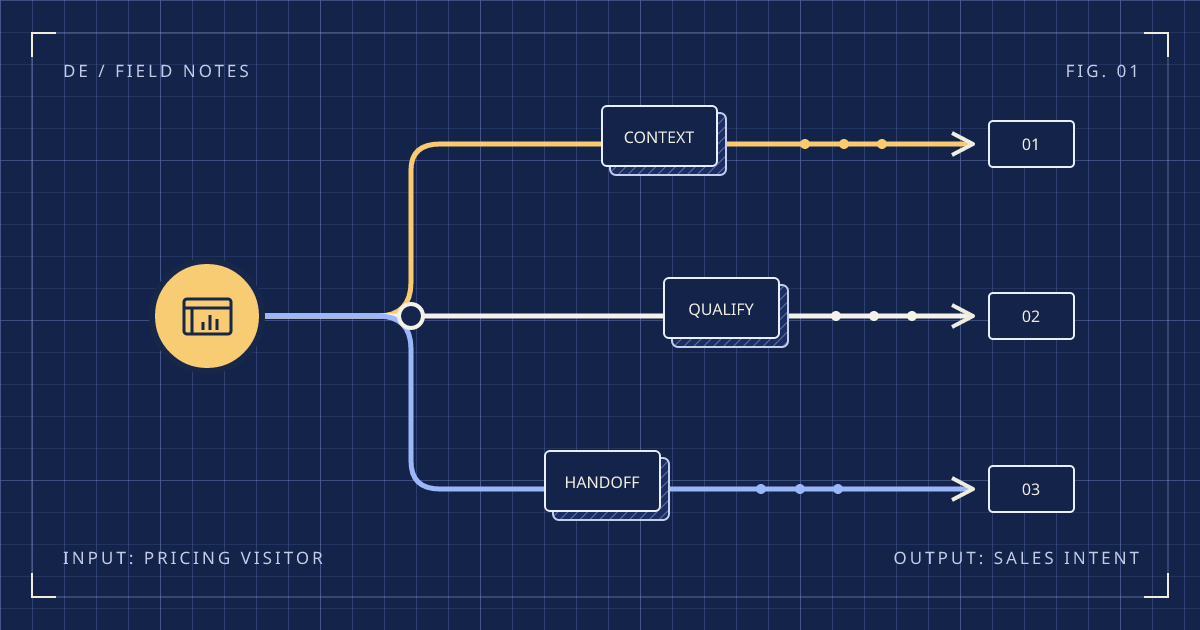
Asana addresses uncertainty about when someone will respond. monday.com asks for more context about the product a buyer wants, which could help direct the inquiry. ClickUp keeps the form inside the pricing experience and offers a way to see the product independently. Those choices would produce different tradeoffs for a founder who wants a ballpark price and an operations lead who wants a demo of a specific workflow.
Our hypothesis is that buyers will be more willing to give up a phone number or describe their needs when they know what they’ll get in return. We observed the handoffs and their copy. We have no data on form completion, lead quality or which path produces more revenue.
The test we’d run first
Keep the fields and routing fixed. Randomly show half of pricing visitors a specific, operationally accurate promise beside the sales CTA and repeat it next to the form. A team that can deliver on it might tell buyers that the first reply will cover an indicative price range and the two details sales needs to refine it. The control keeps the current CTA and form copy.
Measure qualified meetings held per 100 eligible pricing-page sessions. Count a meeting only when it took place and the account met your prewritten qualification criteria. Record form starts, submissions, sales response time and what sales learned on the call. Review the result after both groups have had the same time to book and attend. If submissions rise and qualified meetings stay flat, read the call notes before removing fields or changing the routing rules.
Source evidence
- Asana — Pricing Checked Nov 17, 2026
The Enterprise pricing CTA opens Asana’s dedicated sales page.
- Asana — Contact sales Checked Nov 17, 2026
Sales page promises follow-up within one business day and help choosing a pricing tier. The form did not render in our browser session.
- monday.com — Pricing Checked Nov 17, 2026
The rendered Enterprise quote button kept the pricing URL open. The page includes a quote form and a separate contact link.
- monday.com — Contact sales Checked Nov 17, 2026
The rendered form asks for contact and company information, including which product the buyer wants to explore.
- ClickUp — Pricing Checked Nov 17, 2026
Clicking Contact Sales in the Enterprise card opened a required-field form in place, with the pricing URL unchanged.
- ClickUp — On-demand demo Checked Nov 17, 2026
The public demo page offers role-based videos with no signup required, alongside a personal-demo option.